
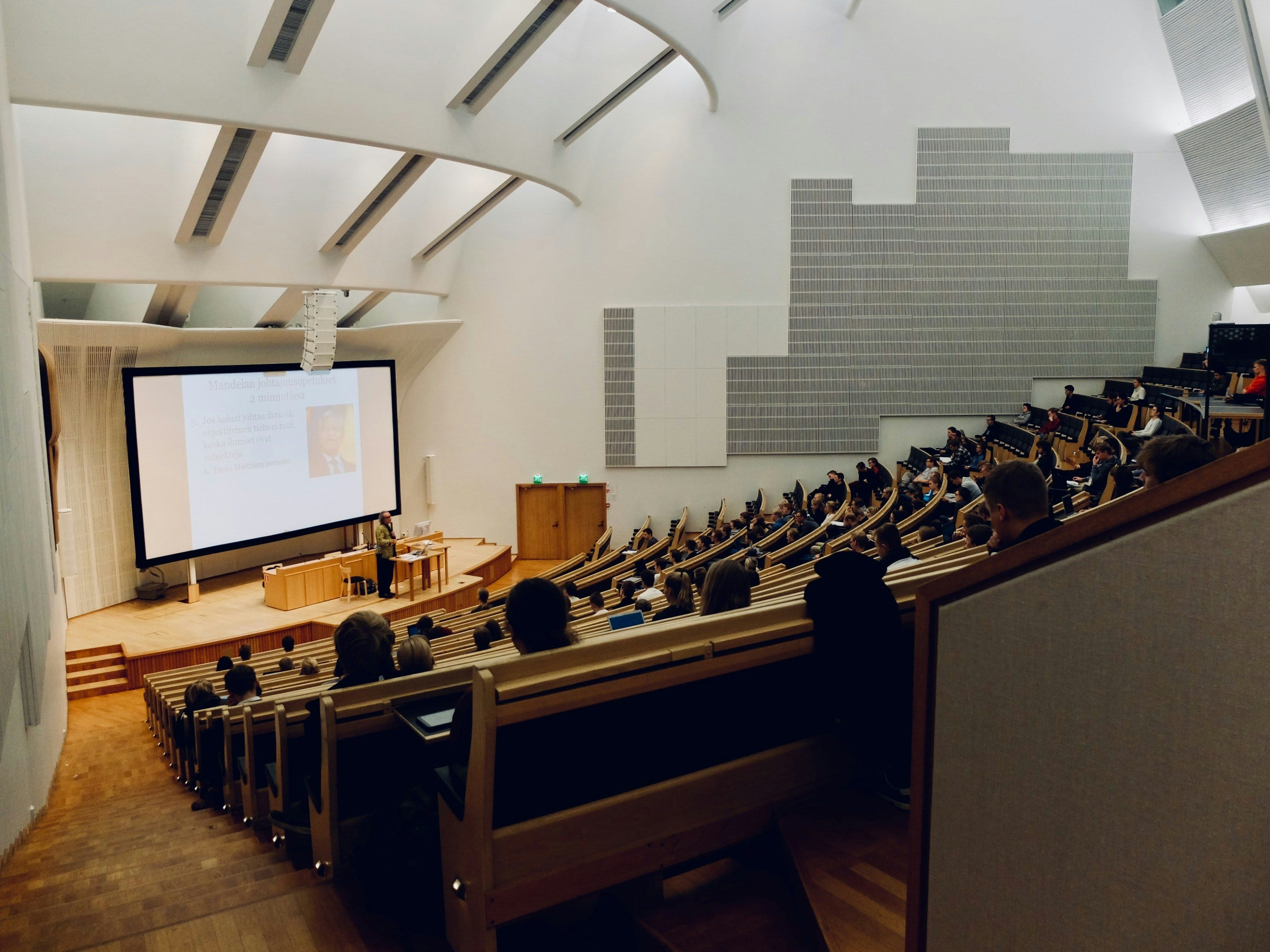
Lionel Page’s essay is useful because it moves the AI-and-universities debate away from the tired question of whether information is now free. Information has been cheap for decades. The internet, YouTube, and massive open online courses (MOOCs) all made high-quality explanations easier to access, yet none came close to replacing universities. Page’s stronger claim is that AI may be different because it cheapens instruction, not just information.
Universities have never been only repositories of knowledge. They organize effort, assess performance, certify achievement, connect students to networks, and place learning inside institutions that employers, governments, graduate schools, and professional bodies already recognize. Cheaper information left most of that arrangement intact. Cheaper instruction puts more direct pressure on it.
This should not be read as a simple prediction that universities will disappear. AI does not need to reproduce everything a university does to change higher education. It only needs to make some important parts of the existing arrangement cheaper, separable, and credible elsewhere. The question is what happens to universities if personalized instruction becomes abundant and inexpensive.
What Page Gets Right, and What the Disruption Story Misses
Page is most persuasive when he distinguishes instruction from information. Earlier online-learning experiments gave motivated students access to lectures, but they did much less to create the pressure, pacing, feedback, and institutional structure that help ordinary students keep going. Learning requires sustained effort for rewards that are often distant and uncertain. Universities supply that structure imperfectly through schedules, deadlines, examinations, advising systems, cohorts, and social pressure. AI could plausibly do more than host content. It could adapt explanations, generate practice, monitor progress, and intervene when students drift.
The harder question is what happens after the learning takes place. Students attend universities partly because the resulting credential is legible to employers, graduate schools, governments, and professional bodies. Page’s more interesting claim is that AI tutoring could become the preparation layer for a separate assessment system: students learn through personalized tools, then demonstrate competence through standardized and supervised evaluation. If such a system became credible, the traditional degree would face pressure from a cheaper competitor.
But credibility is the hard part. A new credential is valuable only when students, employers, institutions, and regulators all have reason to treat it as meaningful. Employers value a credential because serious students pursue it, and students pursue it because employers value it. Page imagines a powerful actor that can help solve this problem by linking an educational platform to prestige employers. That might work in a specific case, but it is not a general solution. Legitimacy still has to be built, borrowed, regulated, or enforced through relationships with institutions that already possess authority.
This is why the disruption story becomes less straightforward once it leaves the world of software hiring. In many fields, credentials are embedded in systems of public authority. Accreditation bodies, licensing boards, state governments, immigration systems, and professional associations help decide who is allowed to practice, study, migrate, or be recognized as qualified. That influence varies by country and occupation, but it is especially important in medicine, law, education, engineering, public health, and other fields tied to public trust or legal permission. A technology company can drop a degree requirement for some jobs. It cannot easily replace a whole system of institutional recognition.
Even where alternative credentials gain traction, they are unlikely to converge on a single winner. AI instruction may concentrate at the infrastructure layer if a few systems become much better than the rest. Credentials work differently. Employers, professional bodies, universities, and platforms may each develop signals for different occupations, regions, languages, and levels of difficulty. The more plausible future is fragmented rather than monopolized.
There is another problem with Page’s testing-center scenario. It may assume too stable a picture of work itself. In fields such as programming, financial analysis, statistical modeling, and writing, AI may change what employers actually need to know about a worker. If much of the job involves steering, auditing, and synthesizing machine-generated outputs, then an exam built around isolated unaided performance may certify an older model of competence. The valuable question becomes less “Can this person do the task without tools?” and more “Can this person exercise judgment while using powerful tools?”
Alternative credentials therefore face a tradeoff. A cheap exam may be easy to scale, but it will measure only a narrow slice of performance. A richer credential can add projects, repeated assessments, collaboration, supervised work, and evidence of persistence. The more it does so, however, the more it begins to recreate the infrastructure universities already possess. Alternative credentials can work, but credibility is expensive to produce from scratch. That is why incumbents have an advantage if they choose to use it.
The tradeoff has a different meaning outside the institutions that dominate global rankings. A globally legible assessment could help talented students from less internationally familiar universities overcome information asymmetries in global labor markets. A strong student at a respected but globally underrecognized institution could demonstrate competence on a scale employers in London, Berlin, or New York understand. At the individual level, that is liberating. At the institutional level, it could be destabilizing. If the strongest students can obtain portable signals outside their local universities, the signaling function that helps sustain those universities could weaken. This matters because universities in developing contexts often do more than teach degree-seeking students. They train public-sector professionals, sustain local research capacity, interpret regional policy problems, and provide institutional homes for public health, education, and development expertise. A credentialing revolution that benefits individual high performers while draining attention, legitimacy, and talent from these institutions could improve private mobility while weakening the public infrastructure that makes regional knowledge production possible.
What Remains Scarce When Instruction Scales
AI changes higher education by changing what is scarce. Explanation and routine intellectual assistance become more abundant. Credible evidence of competence, consequential human attention, access to real institutions and communities, and accountable judgment do not become abundant at the same rate. Much of the university’s future turns on that asymmetry, but the relevant advantages are not all of the same kind.
Some university advantages are structural. Laboratories, clinical access, field sites, regulated professional pathways, research infrastructure, and accountable institutional processes cannot be copied quickly by a platform with good software. Other advantages are scarcity-based. Selective admission, prestige, alumni networks, strong peer groups, and scarce faculty attention remain valuable because they are limited. A third set of advantages is based more on incumbency: familiar degrees, established credential formats, and assessment practices that employers already know how to interpret. The boundaries blur, but the distinction helps explain why some parts of higher education are more exposed than others.
Research infrastructure is the clearest structural moat. AI can already help generate hypotheses, summarize literature, analyze data, and draft arguments, so the advantage is not that research itself is beyond machines. The advantage is organizational. Empirical research often requires laboratories, field sites, community relationships, clinical access, protected datasets, ethics review, equipment, staff, and institutional agreements. These assets are slow to build and difficult to replicate quickly. AI can make them more productive without making them unnecessary. The caveat is that universities also train researchers through apprenticeship tasks such as literature review, data cleaning, preliminary coding, laboratory routines, and supervised analysis. If AI automates these steps mainly to cut labor costs, universities could weaken the training ladder that produces future researchers.
Credential legitimacy and selection sit closer to the boundary between scarcity and incumbency. A university degree is not just a record of coursework. It is a socially recognized signal that someone has been selected, instructed, evaluated, and certified by an institution whose judgments other institutions already understand. The signal is noisy, but familiar noise can still be useful. Selective universities add another layer because admission itself creates information. Even if AI instruction becomes excellent, admission to a highly selective peer group remains scarce. That advantage is much weaker for institutions that admit most applicants.
Mentorship is the most attractive human moat, but it is also the easiest to romanticize. AI can explain concepts, critique drafts, recommend readings, and provide extensive feedback. The defensible advantage lies elsewhere. A mentor can watch a student’s development over time, give them a role on a real project, introduce them to a professional community, and stake reputational capital on their promise. The scarce element is the consequential judgment, sponsorship, and membership in a community where the work matters.
This is where the brochure version of higher education breaks down. Universities do not all provide these advantages equally. Some students receive deep mentorship, research opportunities, and access to powerful networks. Others experience mostly large classes, conventional assignments, and limited faculty contact. A claimed institutional advantage is not a moat if students rarely encounter it.
The Vulnerable Middle
AI will therefore not disrupt higher education evenly. Elite institutions have scarcity-based advantages in selectivity, reputation, alumni networks, and access to highly motivated peer groups. Research-intensive universities possess expensive infrastructure for producing new knowledge. Professional schools often sit inside licensing regimes that cannot be bypassed easily. Regional institutions may have relationships with employers, hospitals, schools, governments, and communities that a global platform cannot simply reproduce.
The more vulnerable institution is one whose value proposition remains concentrated in conventional instruction and degree-granting authority. Think of a tuition-dependent university with limited selectivity, little research infrastructure, weak employer ties, and few distinctive experiential programs. That product made sense when recognized credentials and structured instruction were difficult to obtain separately. It becomes harder to defend if AI makes tutoring cheap and employers develop additional ways to evaluate competence.
Local embeddedness is therefore a possible path out of vulnerability, especially for regional and public universities. A campus tied to local hospitals, school systems, employers, nonprofits, health departments, and municipal agencies can offer something a global AI platform cannot easily provide. It can help students get into internships, community projects, supervised fieldwork, and professional settings where local organizations already trust the institution’s judgment. This route is not available to every institution, and it will not save weak programs by itself. But it is a better response than treating AI mainly as a cheating problem. The more important task is to make the parts of university education that remain hard to copy more visible in the student experience.
How Universities Should Adapt
Universities need something more specific than a call to embrace AI. The better starting point is to ask which scarce assets an institution actually has, then use AI to make the more abundant parts of education cheaper. A research university might lean into research apprenticeship. A regional public university might build around local employers, public agencies, hospitals, and community partners. A liberal arts college might protect intensive faculty interaction, discussion, writing, and residential intellectual life. A professionally oriented institution might focus on supervised practice and industry-recognized competencies. There is no single post-AI university model worth imitating.
The common thread is that faculty time becomes more valuable when it is spent on use, judgment, and apprenticeship rather than on repeating explanations students can now obtain elsewhere. If students can get a good explanation of a difficult concept on demand, the classroom should push them into situations where knowledge has to be used. They might interpret ambiguous evidence, work with messy data, defend methodological choices, revise failed hypotheses, or explain why a conclusion is warranted. AI competence belongs inside that work, not beside it. Future public health researchers, engineers, historians, economists, and lawyers will use AI tools, so the educational task is to teach them enough substance to use those tools intelligently, notice when they are wrong, and remain accountable for decisions made with their help.
Assessment needs the same shift. Much conventional assessment assumes that a submitted artifact is good evidence of what a student can do. Generative AI weakens that assumption. Universities can respond by escalating surveillance and trying to detect machine-generated work, but that is unlikely to be a durable foundation for academic standards. The harder and better question is what evidence would justify the institution’s certification of competence. That evidence will often look less like a finished essay or problem set and more like performance under scrutiny: oral defenses, supervised assessments, authentic projects, portfolios, presentations, fieldwork, and iterative assignments in which students explain and defend consequential decisions. AI can still be used. The point is to stop treating unaided production as the primary evidence of competence and to ask whether the student can reason, judge, revise, and take responsibility for the work.
The same logic applies to credentials. Universities should consider unbundling some of their credentialing power before outside actors do it for them. They already possess legitimacy that new entrants must struggle to build. Shorter credentials, stackable certificates, competency assessments, and employer-linked qualifications could extend that legitimacy into new formats without assuming that every valuable educational experience must be packaged inside a four-year degree.
The Economics Are Uncomfortable
The problem with this prescription is that many of the university functions most worth protecting are expensive because they resist scale. One professor can make instructional material available to thousands of students. The same professor cannot genuinely mentor thousands of students, supervise thousands of research projects, or conduct thousands of oral defenses. The activities that make universities harder to replace are often the same activities that strain their budgets.
AI therefore creates an institutional choice. Universities can use it to reduce labor costs by increasing class sizes, automating routine feedback, and relying on fewer instructors. They can also use it to change how faculty spend their time, letting AI absorb some routine explanation, practice generation, and administrative work while humans devote more attention to judgment-heavy teaching, mentoring, research supervision, and assessment. The second path is educationally more attractive, but it is not the path financial pressure will automatically produce.
Different institutions will make that choice differently. Some may move toward inexpensive AI-intensive education at scale. Others may continue to charge a premium for human-intensive education built around mentorship, research, small seminars, and networks. Regional hybrid models may combine AI-supported instruction with local employer relationships, internships, and community engagement. The uncomfortable possibility is that AI will not simply make education cheaper. It may also make the scarce parts of education more visibly stratified. That is the equity problem. If human attention becomes the scarce educational good, AI could reduce inequality in access to information while increasing inequality in access to institutional opportunity. Some students may get cheap explanations, automated feedback, and scalable tutoring. Others may get mentors, field placements, small seminars, research supervision, selective peer networks, and chances to do real work under real scrutiny. The test of adaptation is whether universities use AI to broaden access to those scarce educational goods rather than ration them more severely.
What This Means for Academic Careers
The survival of universities does not guarantee the survival of academic employment in its current form. Institutional moats protect institutions more reliably than they protect the existing number, organization, or content of academic jobs within them. A university could remain prestigious, solvent, or influential while employing fewer instructors or reorganizing faculty work around different tasks.
For someone contemplating an academic career, the useful question is not which activities AI will never be able to perform. That boundary is uncertain and moving. A better question is whether a particular role becomes more valuable when powerful AI tools are available, or whether it depends on tasks that AI makes cheaper.
The contrast is easiest to see in concrete terms. A faculty role built mainly around delivering standard lectures, producing generic course materials, summarizing established literatures, and grading routine assignments is increasingly exposed to substitution. A role built around original data collection, local partnerships, public agencies, student research supervision, field access, and judgment-heavy assessment is more likely to be complemented by AI. Better tools may make its routine components easier while leaving its most valuable institutional relationships and responsibilities intact.
That contrast suggests three useful heuristics under uncertainty. First, build complementarity by developing work whose value increases when powerful AI tools are available. Second, build distinctiveness through substantive expertise, real research questions, methodological judgment, and relationships with actual communities or institutions. Third, preserve portability through an active research program, a professional network, and collaborations that reach beyond the instructional needs of a single employer.
In public health research, for instance, AI can accelerate literature review, survey drafting, data cleaning, and preliminary analysis. It cannot decide which question matters to a health department, build trust with a field partner, interpret why an intervention failed in a particular community, or take responsibility for the claims a study makes. The academic who builds a career around those latter tasks is pursuing complementarity. If those tasks are rooted in original data, long-term partnerships, and a specific intellectual agenda, they also create distinctiveness. If the resulting work matters to collaborators beyond one department or one course catalogue, it creates portability.
Teaching still matters in this model, but its comparative advantage changes. “I can explain this concept better than an AI system” will become a weaker claim over time. A stronger version is this: I can place students inside situations where they have to think and work like people in this discipline, observe how they perform, and help them become more capable. That is closer to apprenticeship than information delivery.
Conclusion
Page is right that AI poses a more serious challenge to universities than earlier online-learning technologies did. The difference is not access to knowledge. That had already become cheap. The difference is the possibility that guided instruction, feedback, practice, and preparation for assessment become cheap as well, just as employers and institutions begin looking for new ways to evaluate competence.
That does not mean the university collapses into a lecture provider waiting to be disrupted. It remains a cluster of functions, and those functions are not equally exposed. Research infrastructure, accountable credentialing, selective admission, professional networks, regulated training pathways, community relationships, mentorship, and consequential assessment can still matter. They matter most, however, when institutions make them central to what students actually experience rather than treating them as background claims about institutional identity.
Many universities will survive when AI can teach. Survival is not the real test. The harder challenge is whether they can justify their cost by giving students access to what AI cannot cheaply provide: judgment, sponsorship, accountable assessment, public trust, and real work in the world. The durable university will not be the one that proves professors can still out-explain machines. It will be the one that lets machines make instruction cheaper, then spends its scarce human and institutional capital on education that depends on judgment, responsibility, relationships, and trust.